On Saturday, my two sons and I are going to a Renaissance Faire (the antiquated spelling for fair is part of the shtick). Faires are a loosely interpreted form of historical reenactment popular in the US , England, and probably other places as well. This particular faire is called the Sherwood Forest Faire and is somewhat based on the legends of Robin Hood. The two big faires in Texas, the Texas Renaissance Festival and Scarborough Faire, are based on the reign of Henry VIII at the end of the Renaissance, hence the generic name for all such faires.
Faires are fun and festive. We all wear period costumes (sort of, my costume is more 18th century than 16th but it’s all in the spirit of play not historical accuracy). The day is spent in watching the actors play out the storyline of the Faire, listening to music from flutes and dulcimers, drinking good English ale, eating, and watching knights on horseback jousting.
 What does this have to do with aging? It all ties back to a remarkable book by William Manchester called A World Lit Only By Fire (1). Manchester’s book has been criticized (quite rightly, I might add) for numerous errors of fact and interpretation (2, 3), however he draws a compelling portrait between human periods of ignorance and enlightenment. The value of this book lies in this overall point: Western civilization has moved from periods of immobility to periods of mobility (and probably back to immobility and so on in an endless cycle).
The Renaissance is characterized as a time when new ideas were encouraged and new practices were allowed to flourish. Those two conditions, in the 15th and 16th centuries, resulted in the Reformation, exploration of the “New World,” acceptance of new notions of physics and natural history, advances in technology and commerce, etc.
The echoes of the Renaissance persist today. One area where this “new birth” has been slow to mature has been in the perceived roles of the various ways people can be grouped: men, women, children, adults, elders, not to mention stereotypes due to race, religion and culture.
Over the last few decades there has been a shift in the perception of the elderly. People in their 70s are now actively engaged in the world not as the exception but as the rule. I felt sad to learn that Harrison Ford had engine failure and had to crash land his airplane on a golf course. That he is 74 and still flying never occurred to me as unusual.
Much of this altered perception is due to improvements in public health and medical care. People live longer, are healthier and are lots more active. Back in the Renaissance times, living to 60 was remarkable. Now we are shocked when illness takes one so young.
Finally, our expectations for older people have shifted. We do not automatically assume that everyone over 65 is retired and playing golf. In reality their 401K accounts ran out and they need to work. Regardless, the elderly are part of the mainstream of our society not a group on the periphery waiting for the next bus to paradise.
References
- Manchester, W. A World Lit Only by Fire. The Medieval Mind and the Renaissance: Portrait of an Age. Little, Brown and Company, 1993.
- A World Lit Only by Fire. In Wikipedia: http://en.m.wikipedia.org/wiki/A_World_Lit_Only_by_Fire.
- Adams, Jeremy duQuesnay (January 1995). “Review of William Manchester, A World Lit Only By Fire”. Speculum 70 (1): 173–74. http://www.jstor.org/stable/2864746.
Join us for a real-time discussion about ideas raised by this essay on Friday from 12:00 p.m. to 12:45 p.m. See Discussion and SL tabs above for details. Link to the virtual meeting room: http://tinyurl.com/cjfx9ag.

 References
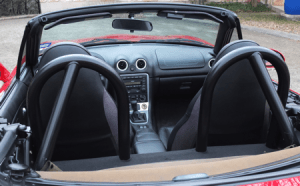 Last week I spent a significant portion of four days installing a roll bar in my Miata. Such a simple looking thing… two steel hoops, one behind each seat. I had to take half the car apart to bolt that thing in. It was worth it. Now my aging bean is really protected should the Miata ever roll over and the chassis is somewhat stiffer. The stiffness improves the handling, converting it from a roller-skate to a roller-skate on steroids. My car adventure reminded me of an earlier blog Tony wrote in 2013. So today we reprise Tony’s examination of driving while elderly.





 Now he has a new computer controlled spoon that vastly reduces the shaking and makes eating much more enjoyable (1, 2).
 We all age (some better than others). But what happens to those who age in prison? We usually think of prisoners as young but there is an increasing number of 65 and older prisoners in the system. Aging men and women are the most rapidly growing group in US prisons. The number of sentenced state and federal prisoners age 65 or older grew at 94 times the rate of the overall prison population between 2007 and 2010. The number of sentenced prisoners age 55 or older grew at six times the rate of the overall prison population between 1995 and 2010 (1)
 I keep coming back to creativity in old age (1). I see creativity and the products of our creative minds and spirits as a major component of why we are going through this particular life. While there are more components to our lives and not everyone seeks creative expression but those who do have a lot tied up it.

 The newspaper today was describing a man’s car collection and one of the cars was a 1942 Oldsmobile B-44 Sedanette. The B-44 was in honor of WWII bomber airplanes. That reminded me of the P-38 Lightning, another WWII airplane. The P-38 reminded me of Antoine de Saint-Exupéry, who was flying an F-5B photoreconnaissance version of that plane in July 1944 when he was shot down and killed (1).
 Rodger Marion


