“I used to think that elder love, if it even existed, was confined to rocking chairs or golf carts, that it had to be a dull business because of the physical limitations of age.” – Nora Johnson

Tony and Bunny
Nora Johnson is 71, long divorced and wasn’t really looking for love when she found George, a widowed 83-years young. For Nora, it just kind of happened. This is the caption attached to the article, Age is No Obstacle to Love, or Adventure. Love is one of the most written about, sung about and mysterious concepts in life. Love is fought over, killed and cried over. And I mean real love. The kind that when you find it, you would do anything to hold on to. If you are a cynic and feel love can never happen, you may be considered fortunate, because you will never experience the pain that comes with the loss of love. But for that, I feel sorry for you, because that pain is the sweetest kind of pain.” And for that, I feel sorry for you, because that pain is the sweetest kind of pain. Makes you know you are alive inside. If you can endure it, and the healing is done, you grow in wisdom, understanding, and appreciation of all that is around you. You see things differently and from all sides. They say the wounds of lost love open those chambers and spaces that otherwise would remain closed and unexplored.
So what about finding love when you are older? Well, I am in my late 50’s and getting married in a couple weeks to an amazing woman in her early 60’s. Not quite in the same age bracket as Nora and George. But there are things I have considered. We are in good health. We play music together, which is how we met. As a couple, we perform regularly at venues here in Galveston. I am convinced that the love of music is what has cemented our relationship. When we are not performing or working on new songs, things can get a little anxious in a hurry. We can’t wait until the regular weekend gig we landed. It helps us connect with each other as well as to ourselves. We are two strong personalities when it comes to music. And I have said that if we can play this kind of music without killing each other, we are meant to be together. We fell in love almost immediately – like something you just know. No big fanfare or ‘wow’ moment. It was just there and we knew it.
Being in the field of Geriatrics, I can’t help but worry sometimes about our future and the inevitable changes that occur with age. How will we deal with things that can jeopardize what we now have? Will [insert any health condition – arthritis, dementia, stroke, cancer] impede how we approach our music, our love, our life? The fear of losing what we have finally found is something we may have no control over and it does scare me. I certainly didn’t think this way during my first marriage. It was all about starting a family, getting the career off the ground and trying to make ends meet. We were young and energetic with the whole world in front of us. But now, this is very different. My kids are grown. I am thinking of retirement and will have new chapters in life to take on. I handle it, I think, by trying to live in the moment. And realize that no matter what happens, the love we feel for each other will not end. In a weird kind of way, we can look forward to helping and supporting each other if illness or whatever challenge crosses our path.
What it comes down to is the message in the Nora Johnson article. Being with George was the ‘loveliest adventure’ and brought joy and magic to her life. That is how I feel about being with Bunny. Her love of life is contagious, as is her wonderful quirky ways that seem to blend so well with my own quirkiness. We are two free souls in a world that promises us absolutely nothing. We work for what we earn and play like kids in a playground. And we will always have the music, even if after who knows how many years, the best we may be able to do is hum to each other. Love really can be found at any age. I am sure of it. How do you feel about finding love at any age?
Oh, and a glorious holiday season to you all – no matter how you celebrate it!
Reference
Johnson, N. Age Is No Obstacle to Love, or Adventure. New York Times Fashion & Style, September 12, 2013.
http://www.nytimes.com/2013/09/15/fashion/Age-Is-No-Obstacle-to-Love-or-Adventure-modern-love.html?_r=0
Our Guest Blogger this week is Tony DiNuzzo, Ph.D., Director, East Texas Geriatric Education Center/Consortium, UTMB.
Join us for a real-time discussion about questions raised by this essay on Tuesday from 12:00 p.m. to 12:45 p.m. See Discussion and SL tabs above for details. Link to the virtual meeting room: http://tinyurl.com/cjfx9ag.

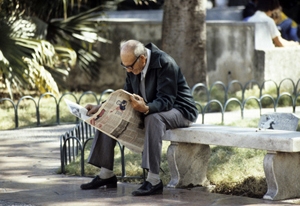 I was thinking thankfulness yesterday. Well, first I was thinking. “Time to split logs for firewood as it’s going to be cold and rainy tomorrow.”
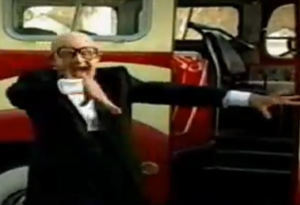 I was thinking about people who start to act old when they are still quite young. This phenomena was more obvious to me when I was a kid. I recall friends of my parents who really acted old when they were actually under sixty. Now, my generation has aged slower than my parents’ generation (60 is the new 40) so some of that “acting old” was probably physiological but I really think a lot of it was psychological in origin.
 The magic of creating of intelligent machines that could interact with humans has long fascinated us (1). Early attempts were based on clockwork mechanisms and called Automatons. Fritz Lang, in his 1927 film Metropolis, created the ultimate mechanical woman who looked quite natural and fooled others that it was human (2). As a child, I first saw a robot in the film Forbidden Planet back in the middle 1950’s (3) provided we discount the Tin Man from the Wizard of Oz whom I did see earlier. I even developed a screenplay for a film about a woman with an artificial, sentient hand but that’s another story.
 What I found interesting about Robot & Frank was how naturally Frank, after some initial rejection, began to treat the robot as a person. I know I talk back to the navigation computer in my car, so I see how easily we anthropomorphize things.
 I had breakfast this morning with some friends at the Wimberley Café. It’s one of those local hangouts where you are sure to see someone you know. On this occasion, my neighbor, who lives about a quarter mile up the hill from me, was at the next table.
 The East Texas Geriatric Education Center-Consortium (ETGEC-C) hosts a monthly video series focusing on a wide range of aging topics. Some videos are light and fun, such as Quartet, Young at Heart and Age of Champions. Others are educational, like Exploring the Myths of Dementia. And then there are those that tear at the heart and make you wonder what it will be like when you are old, fragile and need help. Today we had one of those videos. Living Old is a PBS Frontline film from 2006 that looks at the challenges facing America’s growing elderly population. The film’s synopsis states “those over the age of 85 now comprise the fastest growing segment of the U.S. population, creating a much higher need for medical care and straining America’s health care system.”
 I couldn’t get pregnant because I was missing some critical organs. It was a very dark period in my life – being faced with a health situation that was out of my control. My doctor, let’s call her Dr. Nassairia, was very tough and serious. She didn’t have many warm words of comfort, but at the end of countless appointments, she always patted my knee and smiled into my eyes. I called it the Nassairia knee pat. It wasn’t much, but her demonstration of empathy was just enough to keep me going.
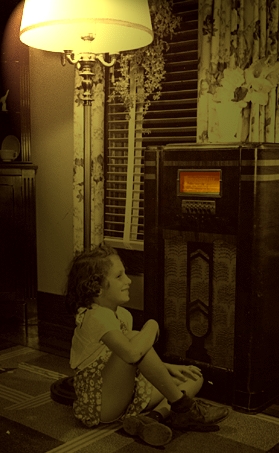 Living in the rural Texas Hill Country I get my electricity from the Pedernales Electric Cooperative. This is a private electric utility owned by the members it serves. It was established in 1938 as part of the Rural Electrification Administration.
 As the Social Worker in the Out-patient clinics at UTMB I both look forward to and dread this time of the year. Medicare Open Enrollment is a confusing and overwhelming time for seniors and their families. Last year I assisted more than 120 patients review their Medicare enrollments. I look forward to this time because our patients are able to get out of plans that do not work for them anymore. I dread it because there are many uninformed people giving seniors advice that is not correct and sometimes the senior is stuck with the wrong plan until next year.
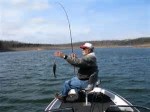 Spending a week at the lake house in East Texas this summer, I ran into some older gentlemen whose lives revolve around bass fishing and boating on the lake. Everyone who spends a lot of time on the water shares a concern about exposure to the sun. When I enquired about application of sunscreen, none of them admitted to using sunscreen as a protection. They did not think that sunscreen is very effective with the amount of time they spend outside, sweating and in and out of the water. They all had stories of friends and family members with a history of skin cancers.
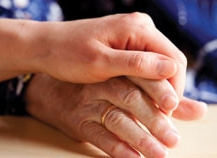 Ronald Crossno recently published an opinion piece in the Austin American Statesman (8-28-13) about several bills in Congress aimed at increasing the number of healthcare professionals trained to provide hospice services. The bills are: Palliative Care and Hospice Education and Training Act (H.R. 1339 and S. 641) and Patient Centered Quality Care for Life Act (H.R. 1666). These bills, if passed, would provide Federal support for training and various other activities aimed at increasing the availability of palliative care.
 Mary was a great patient. She came in regularly, every six months. Nothing wrong, just wanted to make sure everything was working fine. It always was. On this Monday though, something was ever so slightly off. Mary’s gait was wobbly. She was talking just a little too slowly. “What’s wrong?” I asked. She tried to smile. “Nothing, only…” The pause told me what I wanted to know, but I waited for her to finish. “Only the last few days…” Eventually it came out. Her new regimen of morning grapefruit juice was amplifying the effects of her blood pressure medications.
 Our Guest Blogger this week is Mukaila Raji, M.D., M.S., F.A.C.P. Professor & Director, Division of Geriatric Medicine, Edgar Gnitzinger Distinguished Professorship in Aging, and Program Director, Geriatric Medicine Fellowship
 “Driving by men has declined in every age group except those 65 or older, where it increased slightly. Among women, driving declined only among young adults and teenagers.”
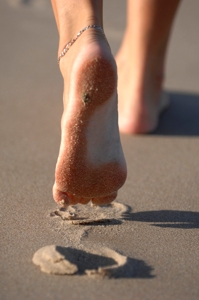
 We are accustomed to the routine measurement of blood pressure, heart rate, respiratory rate, and temperature at every visit to the doctor’s office. We are not surprised by 4:00 am awakenings for obligatory vital sign monitoring in a hospital. Since 2001, the Joint Commission on Accreditation of Healthcare Organizations has required pain assessment in healthcare settings (1). Thus, pain is commonly referred to as a 5th vital sign. What will be the 6th vital sign? Some suggestions include: health-related quality of life (2), distress (3), health literacy (4), urinary incontinence (5), mental status (6), fall risk (7), and gait speed (8). All of these factors are particularly relevant to aging adults. I will elaborate on gait speed, and perhaps future bloggers will be inspired to explore other potential 6th vital signs.
 2013;66:706-709.
 The United States is one of the few countries in the world that considers health care as a commodity and pays for it through the mechanism of insurance provided by private corporations. The rest of the world considers health care to be a public service. Why don’t we change?
 “Avoidance is the most straightforward way of dealing with conflicts of interest.”
 Rodger Marion


